In print and packaging language, “structure” means the geometric and mechanical form of the box: lid type, tuck lock, glue-flap width, wall fold direction and resistance to top load.
The wrong structure lets product collapse on the shelf, opens in transit, or jams the gluer. Before drawing a dieline, know the environment: warehouse, cold chain, post or retail display.
FinalPack covers standard market models with parametric sizing so you do not redraw from an old sample by hand.
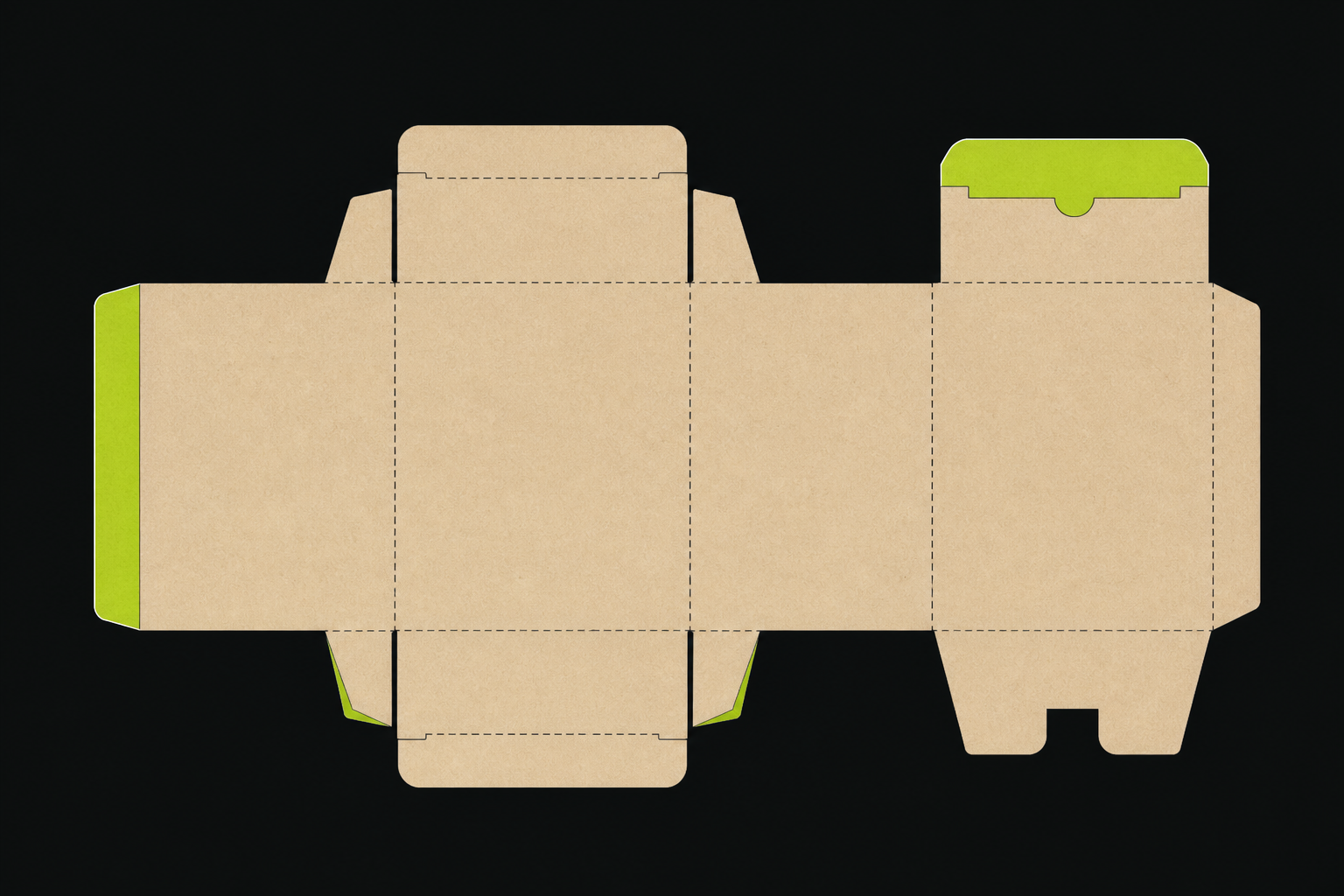
Main structure parts labelled on an opened blank.
Key structure topics
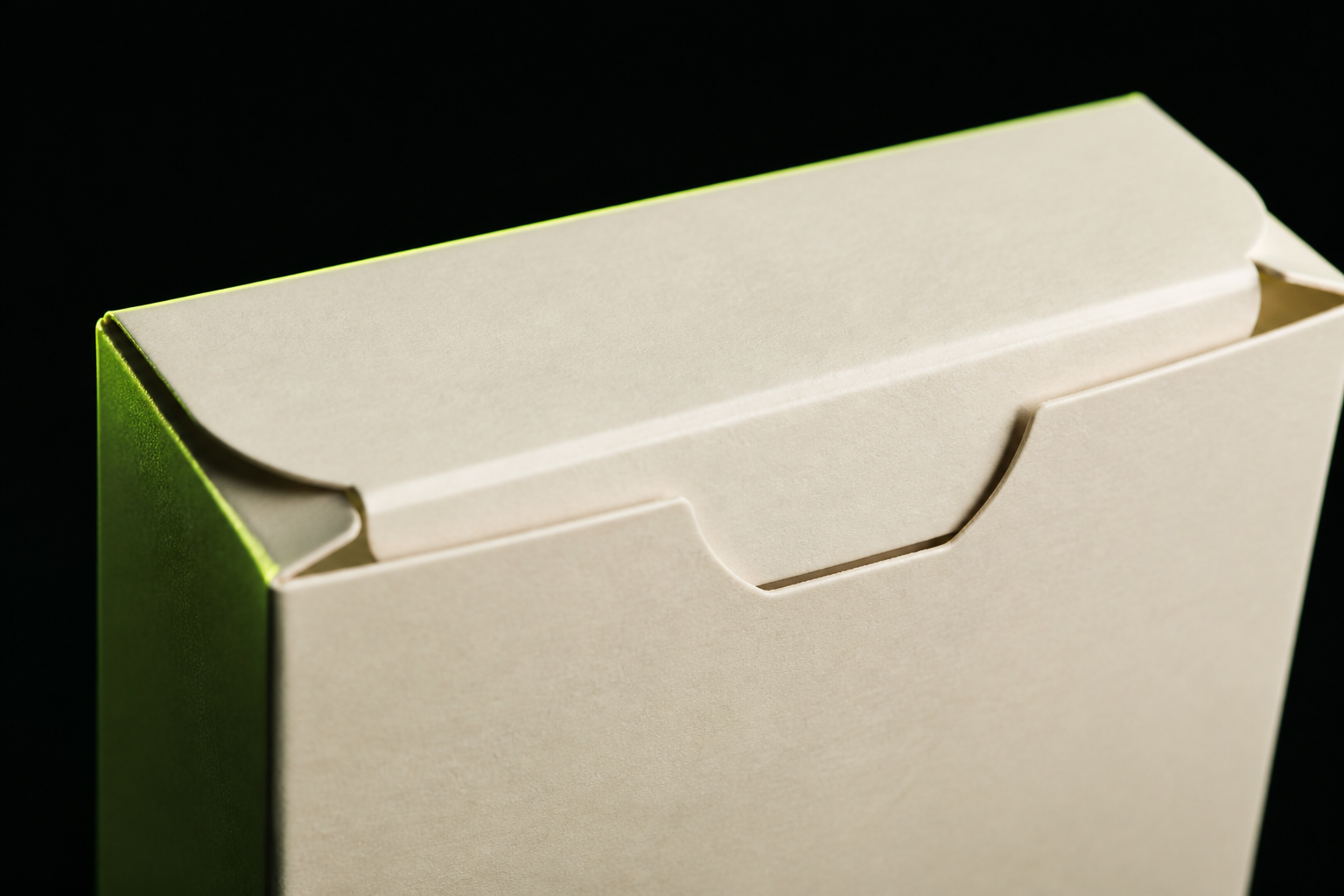
Locking flaps and Tuck End analysis
Friction, tuck depth and lid seal to stop unwanted opening on pharma and food packs.
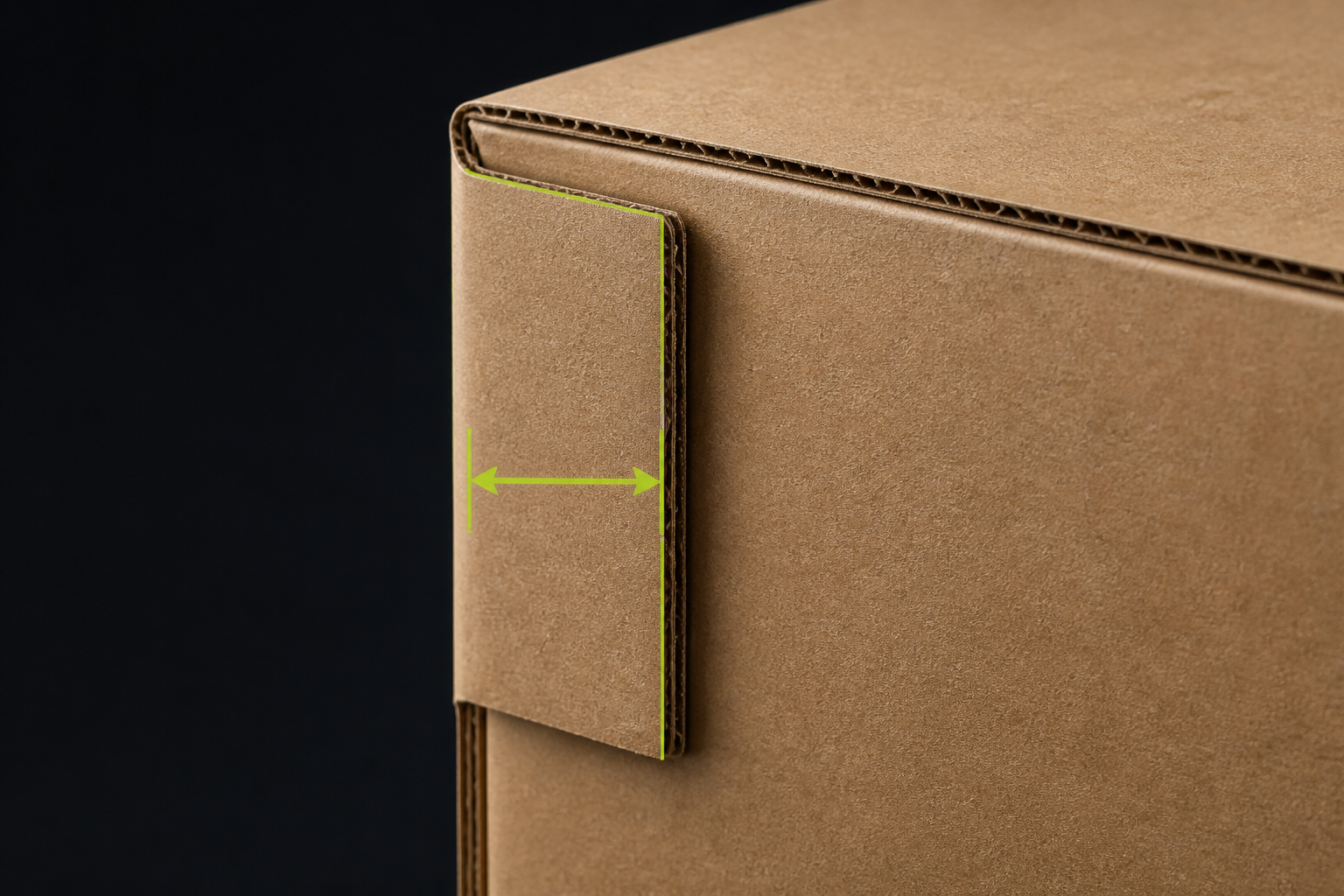
Glue flap width calculation
Standard width 15–25 mm depending on hand gluing or automatic line — direct effect on blank width.
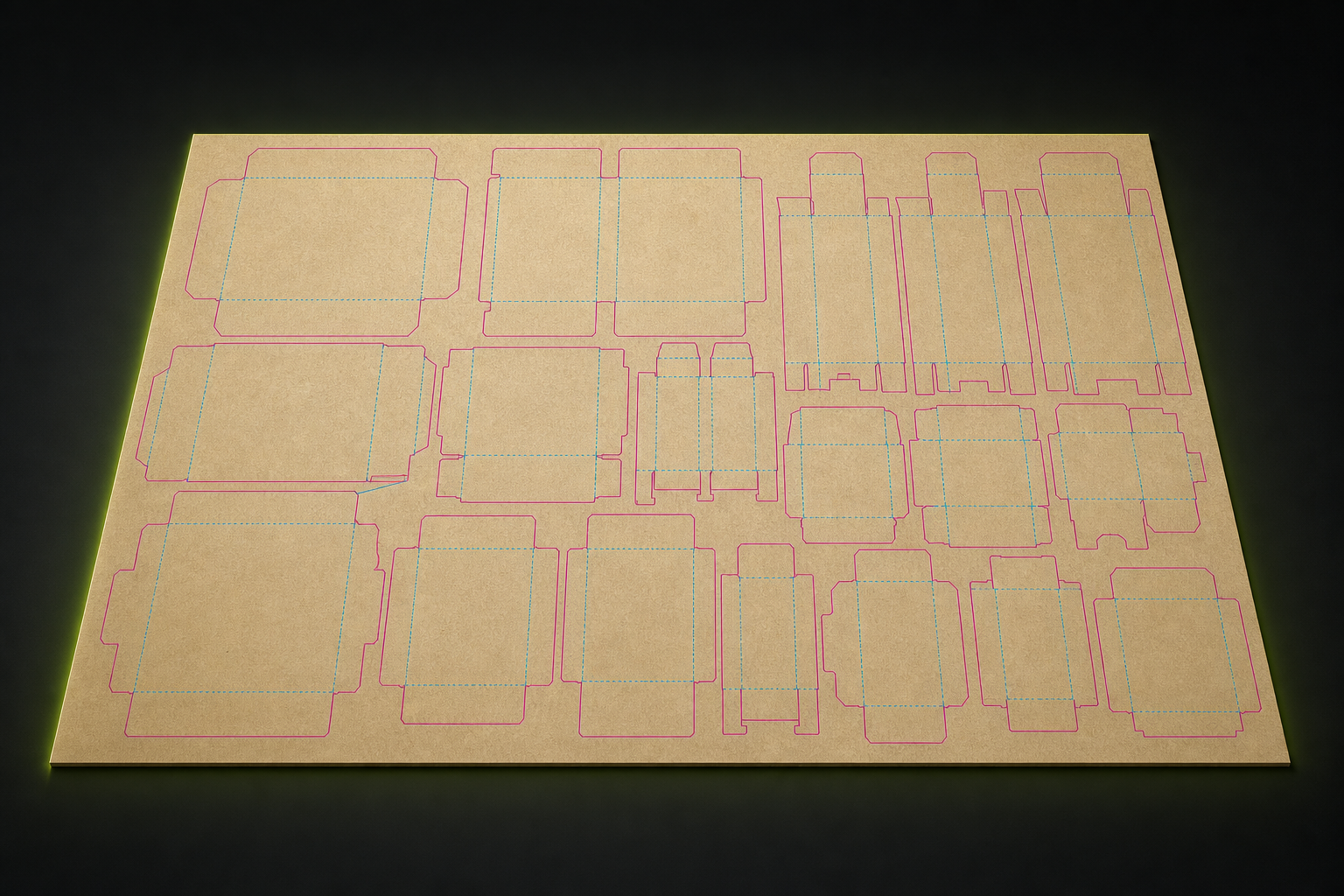
Blank optimisation to cut board waste
Nesting parts on the print sheet for higher yield and less guillotine scrap.
Strength and top-load capacity
Reinforced corners, E-flute vs B-flute, and how crease count affects load bearing.
Common models
Widely used structures in the market
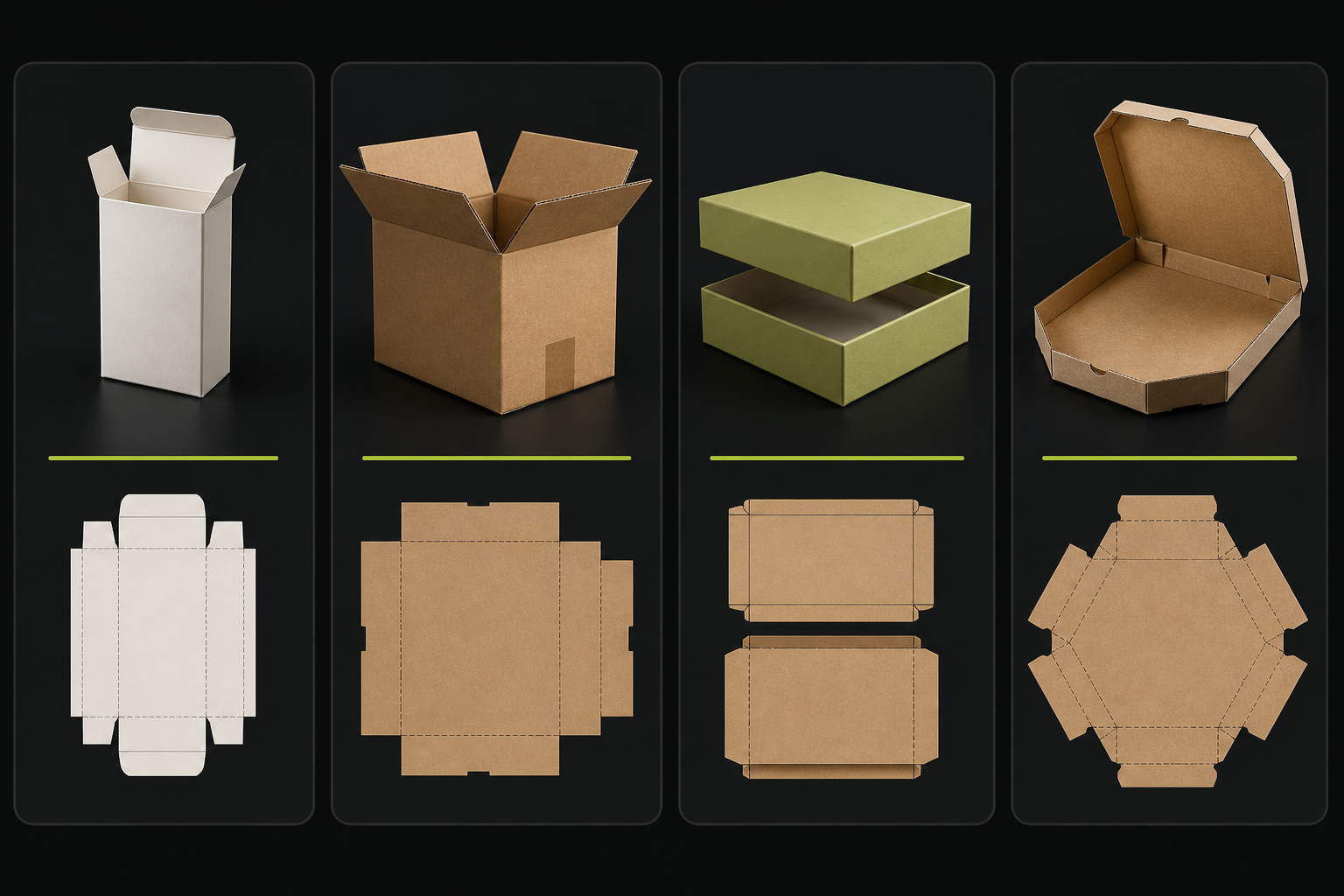
Pharma boxes usually use Reverse Tuck End (RTE) or Straight Tuck End — both ends tuck. RSC cartons close with one side glue flap on a fast line. Fast-food cartons are often built for moisture and repeated open/close.
Straight / Reverse Tuck End — pharma, supplements, small cosmetics
Regular Slotted Container (RSC) — shipping, industrial parts, post
Telescope / Two-piece — gift and luxury boxes
Six-corner — pizza, fast-food, bakery
Visual comparison of common market structures.
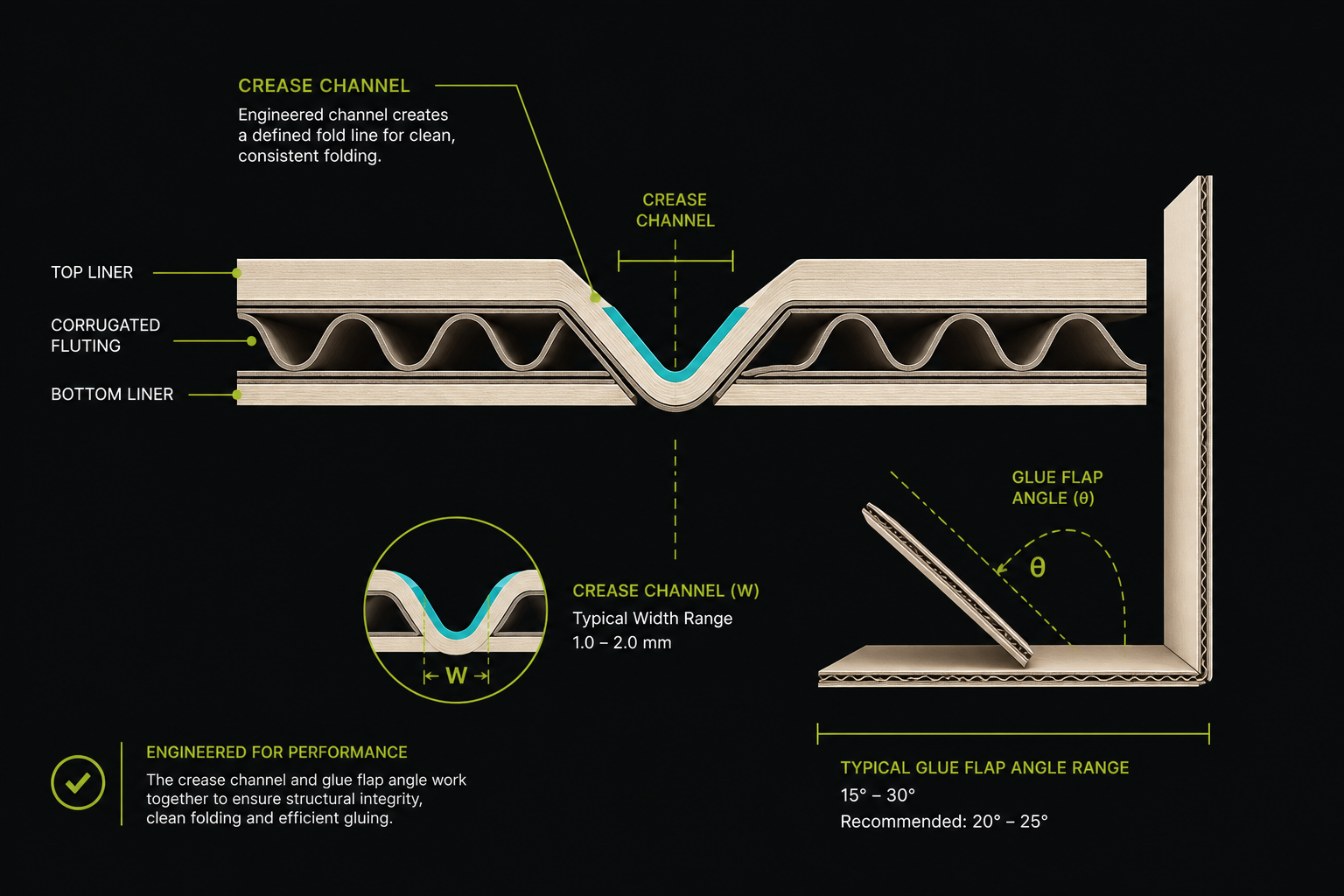
Glue flap and crease angle
The glue flap must be wide enough for adhesive to hold the body without entering the interior. Crease angle is usually 90°, but thick board needs slight compensation.
Each structure produces a unique dieline. After you lock the structure, generate the parametric dieline online and send it to the die maker. Changing structure mid-project means redesigning the die and extra cost.
How to choose the right structure
Four questions before drawing the dieline
1
Product use
Warehouse, cold store, postal ship or direct retail?
2
Packaging line
Manual, semi-auto or full auto — sets glue-flap width and tuck.
3
Print limits
One colour, four-colour or spot UV — affects board and structure choice.
4
Sample test
After the dieline, build a physical sample and test assembly on the real line.
FAQ
What does Tuck End mean?
A lid lock where small flaps tuck into the opposite slot. In Straight Tuck both flaps come from one side; in Reverse Tuck they come from opposite sides.
What is a standard glue-flap width?
Usually 15–20 mm for hand gluing and up to 25 mm for high-speed machines. Too narrow and the body separates; too wide wastes board.
How do I reduce board waste?
By nesting several blanks on one sheet, choosing a simpler structure, and aligning creases with board grain when possible.
Where can I size a structure online?
After you pick a model in the online dieline tool, the structure is applied parametrically. Start from the dieline page.